The hidden cost of website projects built for handoff
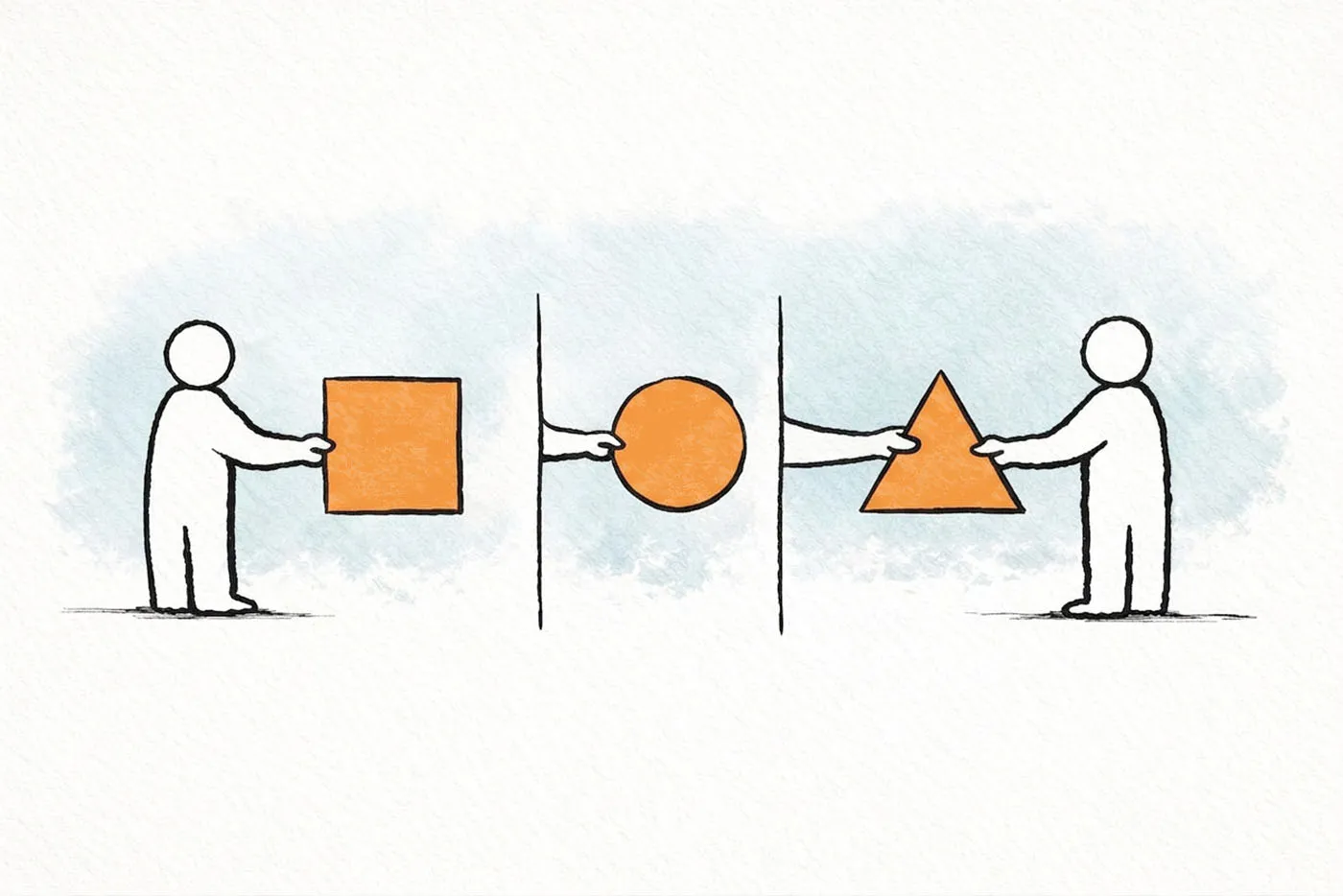
SOME DELIVERY MODELS LOOK CLEAN for the same reason assembly lines do: everyone knows their station. The trouble starts when the work needs judgment, not just movement.
Every handoff asks the next team to infer intent and translate work into a system they may not be able to see clearly enough.
What became clearer to Insurgency as Deckers moved along was that this wasn't only a build problem. It was a handoff problem: too many hands, too little backend visibility, and too much room for the work to change shape on its way through.
Handoffs don't just move files around
They move interpretation around too.
If naming conventions, content flow, backend logic, or implementation constraints aren't visible early, the build team still must keep moving. They make the best assumptions they can. Then the next team interprets those assumptions again inside the CMS or codebase they control. Then QA needs to figure out whether something is a bug or just a different reading of what the work was supposed to do.
That's why handoff-heavy models wear teams down. The work itself may be solid. It still has to survive one more round of interpretation every time it changes hands.
QA is where that gets painfully obvious. The team isn't only checking whether the experience works. It's checking whether the implementation still means what the builders thought it meant.
No backend view means you're building against a silhouette
On Deckers, we were iterating on analytics strategy, but the build team didn't have meaningful visibility into the existing backend structure. The final implementation lived in someone else's environment. At that point, quality turns into an educated guess.
You can still design thoughtfully and build carefully. What you can't do with much confidence is guarantee that the handoff version will behave the same way once it's wired into the live system.
The retrospective evidence here is blunt enough to matter. Once the backend realities became clearer, a large portion of the technical work had to be reworked. That’s what happens when delivery quality has been shaped by missing system knowledge all along.
Analytics confidence drops the same way. If the team shaping the tracking approach isn't the team validating the final implementation, the plan can be thoughtful, and the live firing can still be uncertain.
Fragmented ownership weakens launch confidence
Launch confidence drops when no single team can say, end to end, that the approved work, the implemented work, the QA environment, and the live analytics setup all match. A neat org chart can still produce a messy launch.
This isn't a case for one team doing everything. If the model depends on several teams handing work across invisible system boundaries, the project needs a better diagnostic before anybody calls it efficient.
Who sees the backend early enough to design for reality? Who owns QA truth and analytics verification in the final environment? Who closes the interpretation gaps when the build meets the live system?
Those are operational questions. They also change the user experience materially.
Projects don't fail the professionalism test just because someone missed something early. That happens. The real test is what the structure does with the miss once it exists. Does it bring the problem into the open fast enough to fix, or does it keep handing it around until it starts showing up as implementation drift, messy QA, and shaky launch confidence? Deckers gave us one answer. We'd rather this series help you avoid learning it the same way.

Contact us
Feel free to drop us a message or if you prefer to kick it old school give us a call at 416-602-2095.