Brand love is not a growth strategy
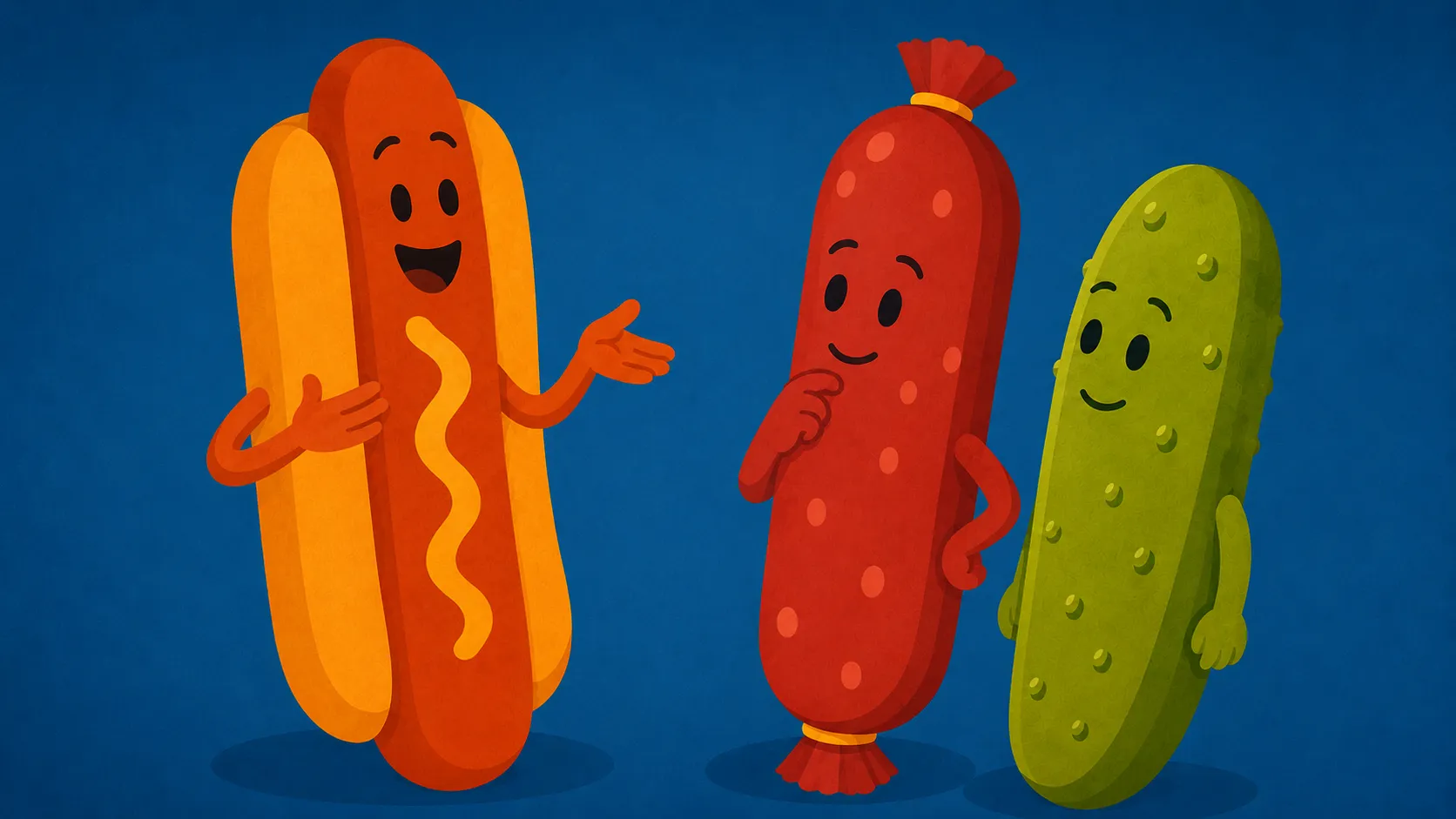
CHICAGO 58 DIDN'T COME TO US asking for help. We went looking.
This started with a text from someone we'd worked with for years saying, essentially, "You like hot dogs. These guys make very good hot dogs. If they're not on your radar, they should be."
Which, as reasons to interrupt a workday go, is fairly strong.
So we got curious. We looked them up. Local Toronto business. Real product. Real history. Chunky website. And we couldn't tell who the site was really for.
That's usually a sign that either we're missing something or nobody has stopped to ask the annoying question.
In this case, the annoying question was simple: why does it look like this brand isn't really putting its story into market?
So we sent the cold email. Very sophisticated stuff. "Hi, you don't know us. A friend pointed us at your brand. We looked around. You seem to have a legacy product and a story people care about. Is there a reason you're not really putting that story into market?"
And because we're not completely reckless, we also mentioned that we had people in common, so if he thought this was crazy, well, there were witnesses available.
From their side, they didn't know who we were from a hole in the wall. They didn't know why we were reaching out. And we clearly didn't know two-thirds of what their business was.
We only knew what we could see.
What we didn't know going into the first conversation was that Chicago 58 was fourth-generation family-owned, using recipes that went back roughly 100 years.
That's not a small story.
That's the sort of thing brands pay consultants to invent badly on a whiteboard.
Chicago 58 didn't need someone to manufacture brand love. It already had that.
The problem was that the love didn't have anywhere useful to go.
The story was there. The mechanism wasn't.
As we got into the conversation, the owner told us more about the business. The family history. The recipes. The fact that people had grown up with the product.
Then we got to the marketing.
They were doing the things that had always made sense to the business. I don't mean that sarcastically. Most companies keep doing what has worked, or what has at least felt understandable, until something forces the question.
From the outside, it felt like the internet had walked right past them, waved politely, and kept going.
Our question was bigger than the website.
What was the dream?
If this worked, what did Chicago 58 become?
He told us he wanted it to become the king of salami in Canada.
Now, "king of salami in Canada" is a spectacular sentence. Internally, we enjoyed it. Externally, we tried to be useful.
Because the next question was obvious: how does what you're doing now get you there?
The answer was, basically, it doesn't. Not because the product wasn't good. Because the activity didn't connect the affection people already had to the business outcome he wanted.
That was the thing we saw with Chicago 58. The brand had memory. The brand had affection. People would talk about it without being paid, bribed, or trapped in a focus group with bad sandwiches.
But affection by itself is passive.
A label doesn't throw a party
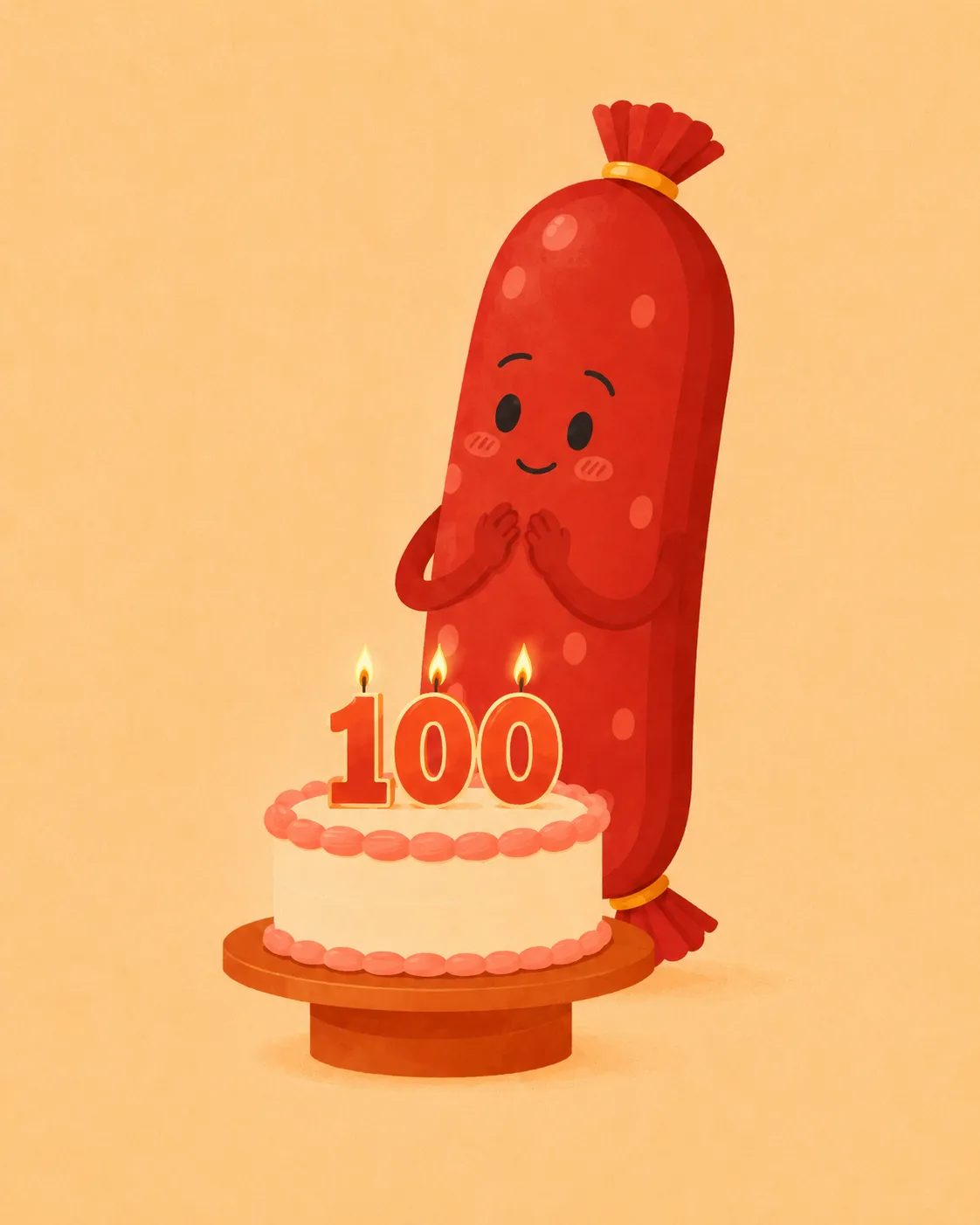
The company had a 100-year milestone coming up, and the first instinct was to change the labels on the salamis and hot dogs.
Fine. We understand the instinct. A company turns 100, you want the packaging to say the company turned 100. Nobody gets arrested for that.
But if you're celebrating 100 years, the useful question isn't only how to announce the celebration.
It's how to bring people into it.
A new label gives existing buyers information. Maybe it's nice information. Maybe someone notices it for four seconds between the deli counter and the trunk.
Information is not participation.
People already had stories. They remembered the hot dogs. They remembered the bbq salami with the marmalade on it. They remembered eating the product as kids. The brand was already living in their heads and, in some cases, in their conversations online.
They just weren't talking with Chicago 58.
They were talking around it.
And that difference matters. A brand being remembered is nice. A brand giving people a reason to use that memory is where the work starts.
Give the memory something to do
So the idea wasn't, "Let's post more."
Please, for the love of whatever deli meat you hold sacred, don't make that the lesson.
The idea was to take the existing affection and give it a shape.
Digitally, that could have meant finding the people already sharing memories, inviting them into the anniversary, asking for stories, and bringing those stories back into the brand.
Because the product was food, the story didn't have to live only on a screen. There were real-world ways to do it: a food truck, a pop-up, something in the area where the business came from, content built around the anniversary and the memory of the thing.
Not a stunt. A mechanism.
There could have been an outreach piece too. If someone in another province said, "I remember this brand," that's not just a nice comment. That's a person raising their hand. Maybe you thank them. Maybe you give them a reason to ask their local store about the product.
None of those ideas were magic.
There was no magic. There rarely is. Which is rude, because magic would make invoicing much easier.
Chicago 58 already had something most brands would love to have: people who cared before the brand had asked them to.
Insurgency saw a chance to organize that care.
That's where the story matters beyond Chicago 58.
Not because every business has a 100-year-old salami story. Thankfully, for everyone's cholesterol, they don't.
Brand love was the raw material. The strategy was deciding what to do with it.
What behavior do we want to make possible now? Share the story? Tell us their own? Show up somewhere? Ask for the product somewhere else?
That's where marketing gets useful. Not when it admires the story. When it gives the story a job.
The product was real. The history was real. The affection was real. But none of that automatically becomes growth just because the raw ingredients are sitting there looking impressive.
With Chicago 58, the first job was clear enough: give the love somewhere useful to go.
But seeing the opportunity was not the same as proving the case for it. In the next post in this mini series, we’ll get into the part we probably should have made sharper: the business logic underneath the idea.
But seeing the opportunity was not the same as proving the case for it. The next post in this mini series gets into the part we probably should have made sharper: the business logic underneath the idea.
If the raw material is there and the next move isn't, that's usually worth a conversation. Contact us.

Contact us
Feel free to drop us a message or if you prefer to kick it old school give us a call at 416-602-2095.