The store visit you could measure
MIDEA’S WEBSITE FINALLY WORKED. After the IA rebuild, traffic had somewhere to go. The foundation we’d spent the early months fighting for was in place.
Which meant the next problem had nothing to do with the website.
We had to launch new categories. Dishwashers. Laundry. And there was no mainstream budget. The client didn’t have it and we weren’t going to pretend they did.
So we went digital-first. Search ads and interstitial display. Nobody was going to see a Midea dishwasher on a highway billboard because that highway billboard didn’t exist.
But here’s what we did have: a product people research before they buy. Nobody grabs a microwave the way they grab a hot sauce. They check reviews. They check dimensions. They do homework. And homework happens online.
If we couldn’t afford to shout at everyone, we’d find the people already looking. And we’d split them into two groups.
Sixty percent of the budget went to condo dwellers. The messaging was about size, efficiency, fit. A dishwasher that works at 500 square feet. A microwave that doesn’t eat the counter.
Forty percent went to retail shoppers. The parents browsing Canadian Tire on a Saturday. They might be buying a gift for the kid with the new condo. Different audience, different ad.
Home, then store, then what?
If someone sees our search ad on their laptop at home, then walks into a store a few days later, did the ad do its job? Could we prove it?
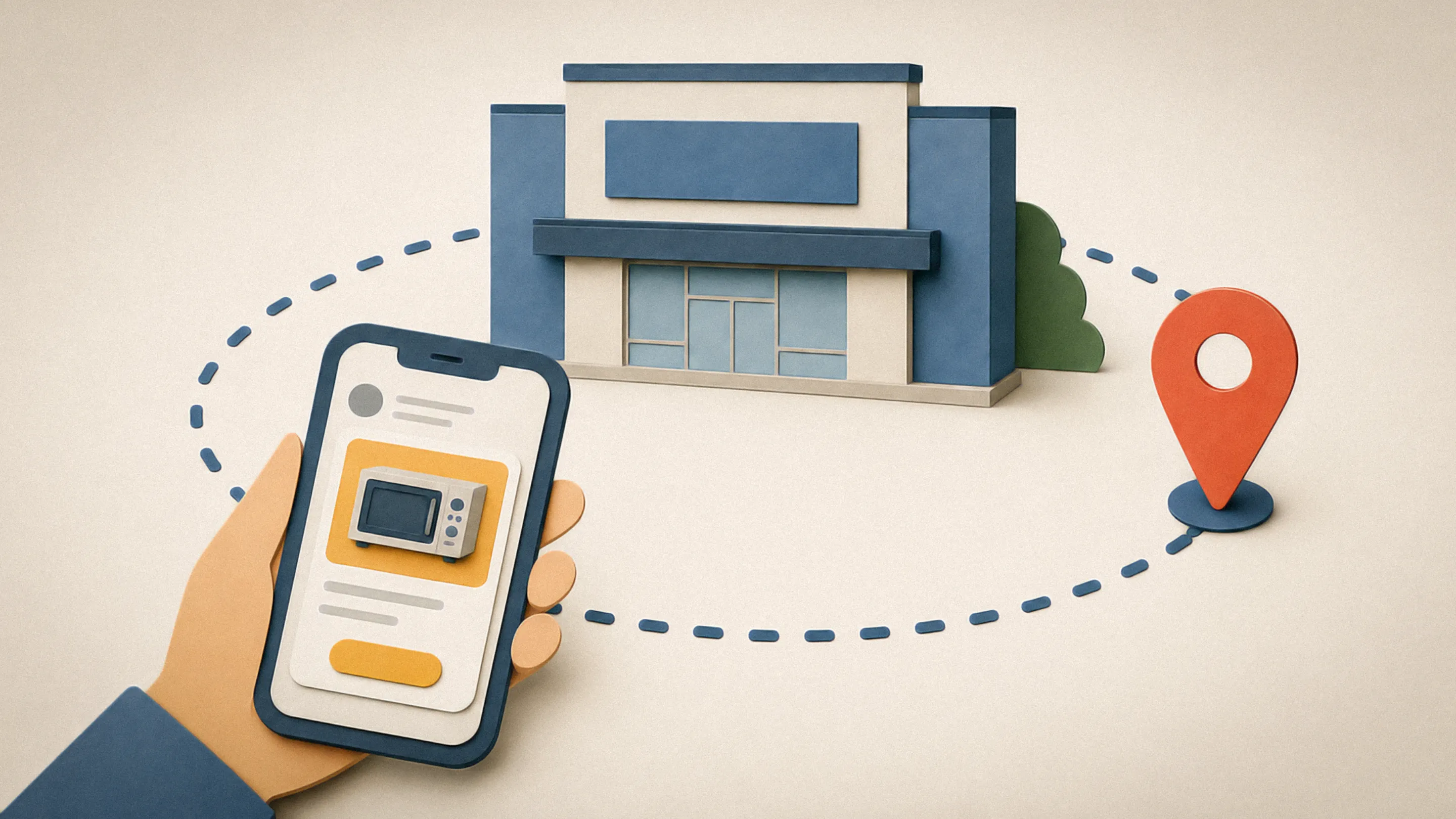
We drew borders around the stores. Digital geo-fences. Every Canadian Tire, every Home Depot, every Lowe’s and Rona location we knew carried Midea product. We mapped them. The tooling wasn’t exotic. It was standard location-based targeting available through Google Ads. The thinking is what made it useful.
Someone would search for a compact dishwasher on their laptop from a residential IP address. Signed into Google. A few days later, that same Google account would appear on a mobile device inside one of our geo-fenced perimeters. At a Home Depot. In the appliance section.
They’d researched at home. They’d gone to the store to look.
We added a second layer. When someone who’d seen our ad crossed a store border, we retargeted them with a reminder ad. A nudge. You saw this online. It’s in stock here. Take another look.
The data was clear. We could see the journey from search query to store visit. We could prove our ads were driving foot traffic. For a brand nobody had heard of, that was real.
Here are the people who searched. Here are the people who walked into stores afterward. Here is the ad that reminded them at the door.
We could measure the visit.
The data stopped at the door
What we couldn’t measure was the purchase.
Retail doesn’t share POS data with brand media agencies. Canadian Tire isn’t going to open their transaction logs and say here, match these to your impression data. We weren’t naive enough to expect it.
But it created a void. We could see traffic land on product pages and bounce to a retailer’s site. And then it disappeared. The person might have bought. They might have looked at the box and walked away. They might have bought a competitor’s product three feet to the left. We had no way to know.
We’d proven the first half of the funnel better than the client ever had. We couldn’t prove the second half. Any brand that sells through retail lives with that gap.
We proposed a workaround. CRM loyalty through warranty registration.
Every Midea product came with a warranty card. Nobody fills those out. Nobody. We suggested making it worth their time. QR code on the box. Quick scan, pre-filled form, done in thirty seconds. And once the customer was in the system, we’d send them something that wasn’t a sales pitch. Recipes. Maintenance reminders. Seasonal tips. A reason to open the email that wasn’t “buy more.”
If retail wouldn’t give us purchase data, we’d build our own direct relationship with the customer. Warranty registration was the bridge. Value-add content was the reason to cross it.
Not everyone at Midea agreed. Some people wanted the registration emails to sell extended warranties or accessories. The value-add approach felt soft to them. Fair enough. We stood on the other side of that argument because we believed the customer would see through the sales pitch and stop opening the emails entirely. Better a small list of people who trust you than a large list of people who deleted you.
The engagement ended naturally when the client champion moved into retail. She’s now head of marketing for Midea across the Middle East and Africa. She still calls when she needs a fresh take on something.
The geo-fencing work stood. The audience splitting held up. The measurement of showrooming behavior was real. We could prove foot traffic. We couldn’t prove the register.
You can measure the store visit. You might never measure the buy. Accept the gap. Build a bridge worth crossing.
I can’t promise we’ll close your attribution loop either. But we’ll tell you honestly what can be measured and what can’t. If that’s more useful than a pitch deck, let's talk.

Contact us
Feel free to drop us a message or if you prefer to kick it old school give us a call at 416-602-2095.